Design Process
Why References Are Part of My Design Process
Looking for design inspiration is not copying. References help me understand patterns, question decisions, and find a clearer direction.
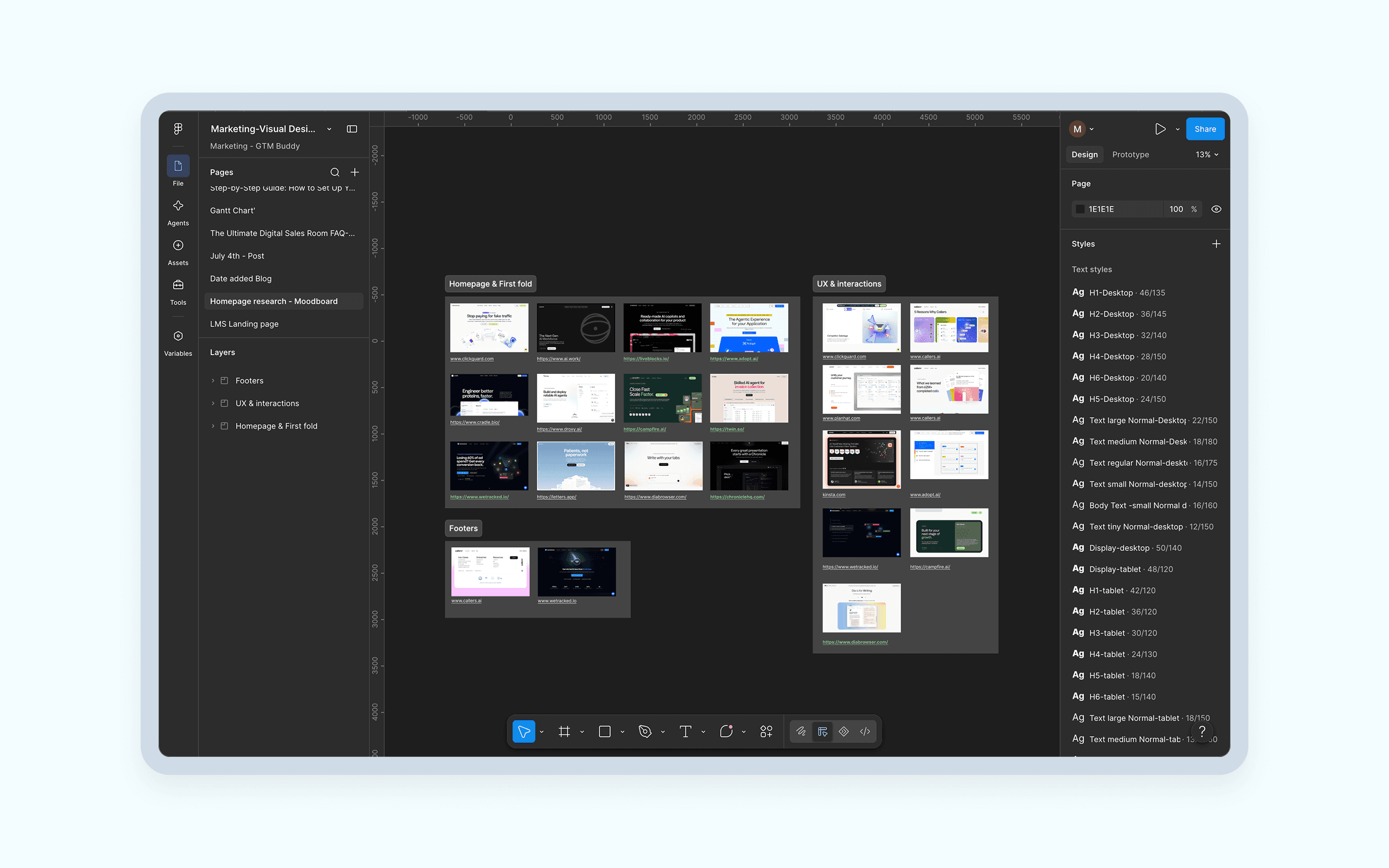
Looking for references before I start designing is not a bad thing. For me, it is an important part of the design process.
Good designers do not work in a vacuum. We look, study, collect, and try to understand why something works.
I usually keep references around my working canvas. They help me notice patterns, compare different directions, and get clearer about what the project needs.
References are part of the thinking
I do not collect references just to find a visual style.
I look at how information is organised, how a page creates hierarchy, how typography supports the message, and how the experience guides someone from one section to another.
Sometimes a reference helps me discover what I want to do. Sometimes it helps me understand what I should avoid.
Both are useful.
Design research has also described searching for inspiration as a common and important part of design work. What matters is how the designer studies and applies what they find. Read the Design Society research.
What I usually collect
My reference boards often include:
Finished websites and digital products
Brand systems and campaign designs
Editorial layouts and typography
Motion and interaction examples
Projects solving a similar content or UX problem

I prefer looking at real, finished work. A shipped product can teach me more than a random visual because it has already gone through real constraints.
It shows how content, typography, interaction, accessibility, and business needs come together.
AI makes strong references more important
AI can generate endless visuals now. But not every generated direction is equally useful.
More options do not automatically result in better design.
Strong references give me something real to evaluate. They help me understand what has already worked, what feels relevant, and where there may still be space to create something different.
AI can increase the speed of exploration. My responsibility as a designer is still to choose what makes sense.
Inspiration is not copying
Taking inspiration and copying are not the same thing.
Copying repeats the final appearance. Inspiration means understanding the thinking behind the work and applying that learning to a different problem.
I might study the hierarchy from one project, the storytelling from another, and the interaction pattern from something completely different. The final direction still needs to respond to my own content, audience, brand, and constraints.
When a reference has done its job
A reference has done its job when it helps me ask better questions.
Why does this layout feel clear?
What makes this interaction easy to understand?
Which details support the idea, and which ones are only decoration?
Would the same decision work for my audience?
Once I understand those things, I can move away from the reference and create something that belongs to the project.
References do not make the work less original. Used with intention, they help me move beyond my first idea and find a stronger direction.
